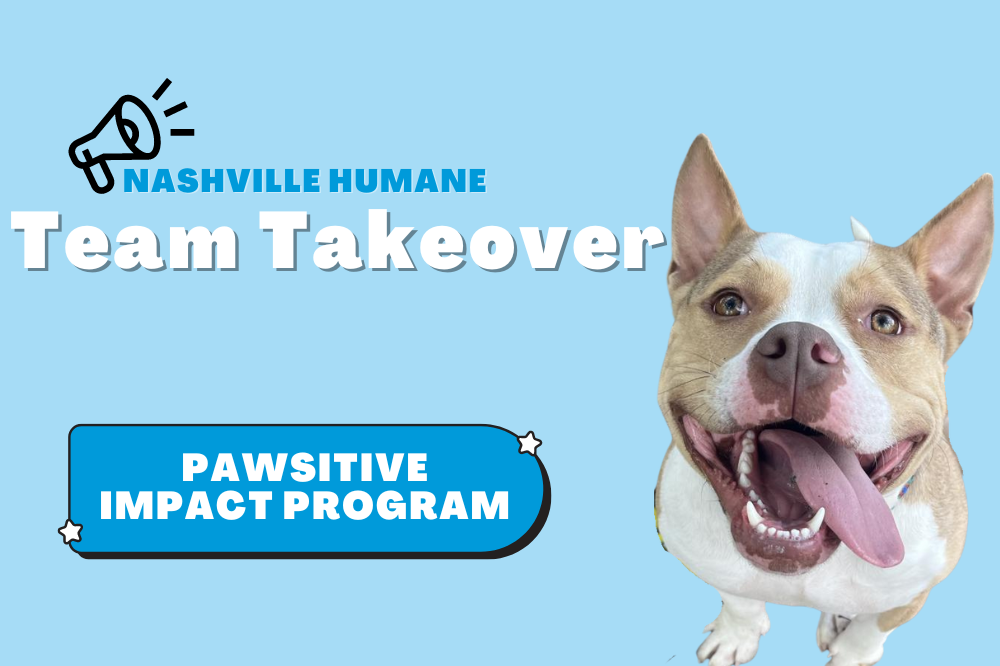
Welcome to our next Team Takeover! Want to know more about the behind-the-scenes of Nashville Humane? This is your chance! You’ll get to hear from our staff and volunteers about what they experience, what they are passionate about, and what they think the community should know. The work we do and the lives we save wouldn’t be possible without our team and we want you to know them better! It is hard to grasp what the shelter world is really like without working in it, but we hope these takeovers give our community a better understanding of our work and mission!
________________________________________________________________________________________________________________
The biggest needs in a shelter aren’t just food or toys—though we do need those too! The most critical resources are time and space. We need time to find homes for pets through adoptions, and space to house animals while they wait.
Shelters are like a hotel when we get right down to it, there are only so many rooms. Once they’re full, we have to free up space. Either through getting adoptions or unfortunately, some shelters have to consider euthanasia to make room for new pets. We are lucky we don’t have to because we are committed to finding homes for the adoptable pets in our care. But that leaves us at the mercy of adoptions to make space for pets in need.
Who Gets the Open Spot?
Let’s look at two common scenarios:
Spot -This puppy was found in the woods, they were taken to their local animal control. They were sick as a little puppy and while in treatment grew into an awkward older pup, less cute than the other pups on the adoption floor. After weeks with no interest, animal control faces a tough choice: They have other dogs they have to bring in and they need the kennel he is in. They reach out to NHA to see if we have the space to take him, otherwise they will have to euthanize him to make room for other dogs.
Fido– At the same time another puppy is living with a family. They really enjoyed their time with him at first. They played a lot and took tons of cute pictures cuddling together. As the puppy grew the family spent less time with him. The kids got busy with school and sports, and the parents with work and friends. He started getting into the trash, and peeing inside. The family is overwhelmed and wants to rehome him.
With only one kennel open, which puppy do we take in?
Shelter staff face decisions like this every day, but there’s a better way: Self-Supported Rehoming!
What is Self-Supported Rehoming?
This approach lets pets go directly from their current home to a new one, without ever entering a shelter.
Why Self-Supported Rehoming?
When people want to rehome their pet, the best option is often to find a new family themselves, rather than bringing the pet to a shelter. This may seem counterintuitive, but it helps save more animals. Most pets being rehomed aren’t in immediate danger, and by keeping them out of the shelter, we can focus on pets who truly need a safety net. Helping those pets go straight to a family without ever entering a shelter will be a huge win.
A Win for the Previous Owner:
They know the pet is in a happy family, they met the new adopter and have a connection with them, and they were able to get them into a home quicker than they could have gotten their pet into a shelter most of the time.
A Win for the New Family:
When you adopt from an individual you learn so much about how that pet behaves, what they do and don’t like, and how they have lived up until you got them. You get to talk to the people who know this pet the best directly and that gives you additional insight into their personality.
A Win for the Pet:
No matter the love and care we offer, a shelter is scary to most animals! It is a lot of hustle and bustle, people and animals, sights and smells, constant change. Many pets don’t show their true personalities here at all, and some get sick because they are stressed and around so many other animals, lowering their immune system and leaving them vulnerable to catching illness.
A Win for Pets in Danger:
When pets with nowhere to turn need somewhere to go, we want to be there. When loving families that have to rehome due to difficult circumstances have the availability to find their pets a home through “Self-Supported Rehoming” it saves those kennels the pet would have gone into for animals who need it as their only hope
Another Example:
One family is starting a new job and won’t have enough time to spend with their dog. They feel like another family would be a better fit.
Another has 1 month until they are evicted and can not afford any of the housing that is pet-friendly.
Both come in on the same day, and we don’t have any open kennels.
What would you do?
What We Do:
- Point the family with a new job to “Self-Supported Rehoming” to advertise their pet to a new family that may be a perfect fit! The pet will definitely have less time and attention in the shelter while awaiting their new family than they would staying in their home through the transition. And likely they would find a new family earlier than most shelters would be able to make space for them.
- The people facing eviction we would also get them started with “Self-Supported Rehoming” and make a plan to try to bring their pet in at the end of that month IF they aren’t already safe and happy in their new home by then (which they often are)
Some people are wary about this process, both as owners and as adopters. We’re here to tell you the process has shown to be effective, while also keeping the animals safe!
For Owners Looking to Rehome:
People may be worried about picking the right family, and avoiding the wrong one. What is important to remember is there isn’t anything magical or special about pets coming from the shelter. When we adopt out pets, we talk to people, ask them questions, and listen to them. It is all absolutely something you can do at home too! Here are a few resources that may help you through the process:
For Adopters:
You may be concerned about not adopting from the shelter, and not “saving” a pet. But in all reality when you adopt directly you are keeping a pet from entering the shelter and helping save another who gets that spot too!
It’s important to remember that even if your pet isn’t in our care, we’re still here to help! We’re happy to offer advice and resources to assist you in caring for your pet or finding them a new home. You can also post on our Home-to-Home or Adopt-A-Pet platform, where we’ll guide you through the rehoming process. This platform may feel more comfortable than using social media for finding or rehoming a pet. Here are a few places to get started:
- Our Home-to-Home page can be accessed by clicking here.
- Our Adopt-a-Pet page can be accessed by clicking here.
(These allow us to help guide you in marketing your pet to the broadest audience!) - Get Your Pet
- Rescue Me
- Pet Rehomer
- Rehome Your Pet
- Facebook TN Rehoming Group.
Remember: Posting to all networks mentioned – as simple as a copy and paste – allows the greatest opportunity in finding an ideal match! You might also consider Bcc’ing all emails included in the Directory below as this will allow you to reach all rescues and shelters at once – ensuring all who may offer support have the ability to do so.
Tips for Marketing Your Pet:
- Prepare a “resume” or “dating profile” of your pet. This will help adopters determine if the pet is a good fit. If writing isn’t your talent, you can even use Chat GPT to make things easier. A description should include:
- Veterinary history
- Diet
- Energy level
- Experience with other animals
- Personality traits
- Favorite games/activities
- Behavior quirks or difficulties with certain situations (i.e. hides during thunderstorms)
Here are some tips for writing about a pet!
- Have the animal groomed or give him a bath. People are drawn to clean, well-cared-for pets.
- Show off your pet! Take a good picture to add to your posts. Make sure your photo is taken vertically, in good lighting, in a clean/neat space, and shows the pet’s personality.
Here are some photoshoot tips and tricks!
- Take your pet to the vet for a checkup and any overdue vaccines. A spayed or neutered pet be more desirable. (We have a list of low-cost vet resources listed as well)
There are a lot of different paths to rehoming, and if we all try and take advantage of these opportunities we can keep shelters an effective safety-net for adoptable animals with nowhere left to turn.